
A gambeson was fundamentally a form of textile armor: a layered, heavily quilted garment used in medieval Europe. It was commonly worn beneath mail and early plate armor, where the fabric improved comfort and helped cushion the force of impacts. It was not normally a jacket whose main defense came from hidden metal plates, and a complete mail shirt was generally a separate armor layer.
The confusing part is that medieval armor changed over time. Later fitted arming garments could support plate components and sometimes carry localized mail panels. Meanwhile, coats or pairs of plates and brigandines placed metal plates inside a fabric covering. Those related constructions should not all be collapsed into the word “gambeson.”
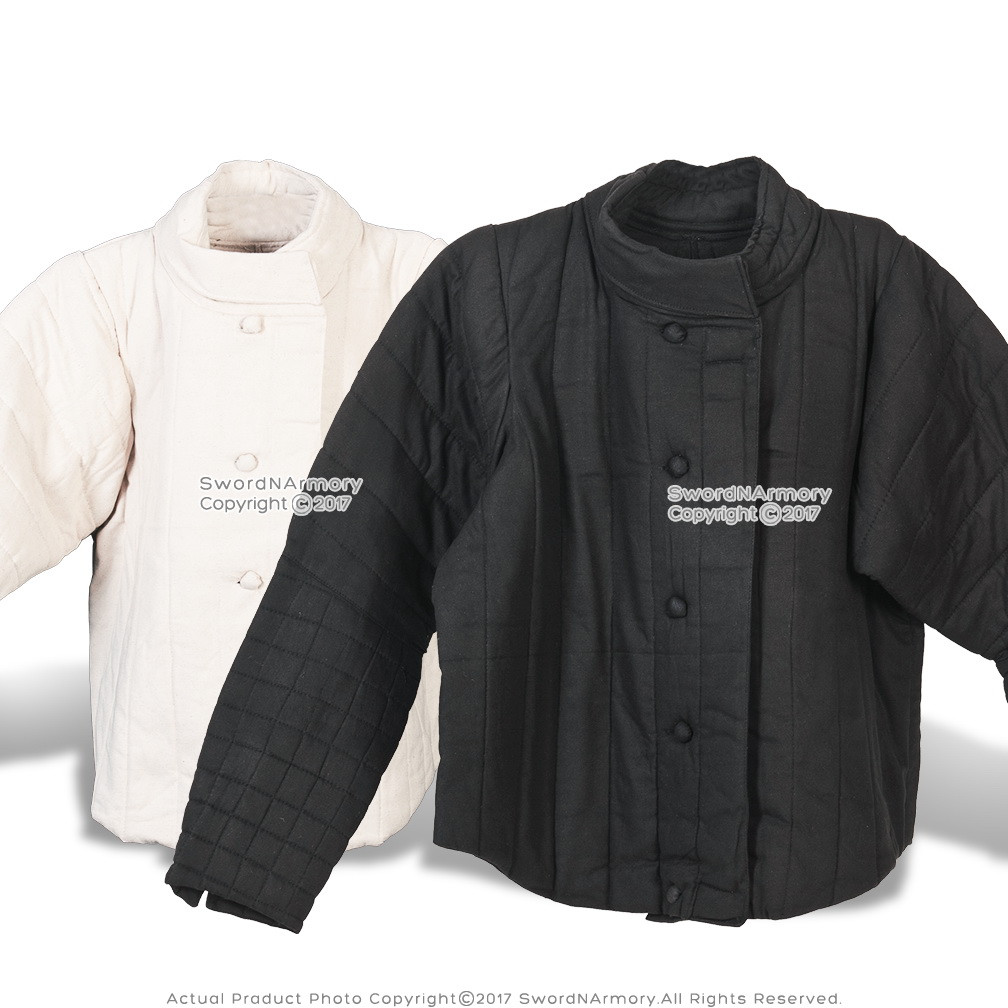
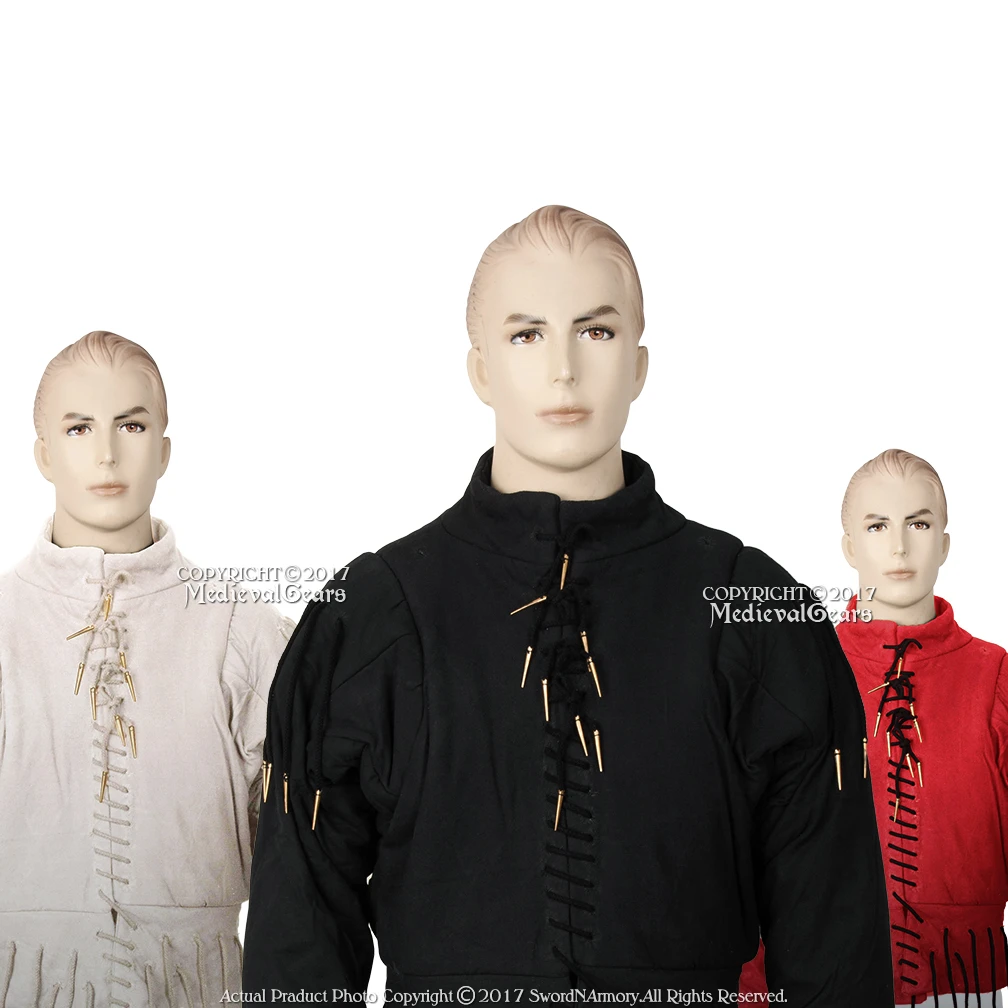
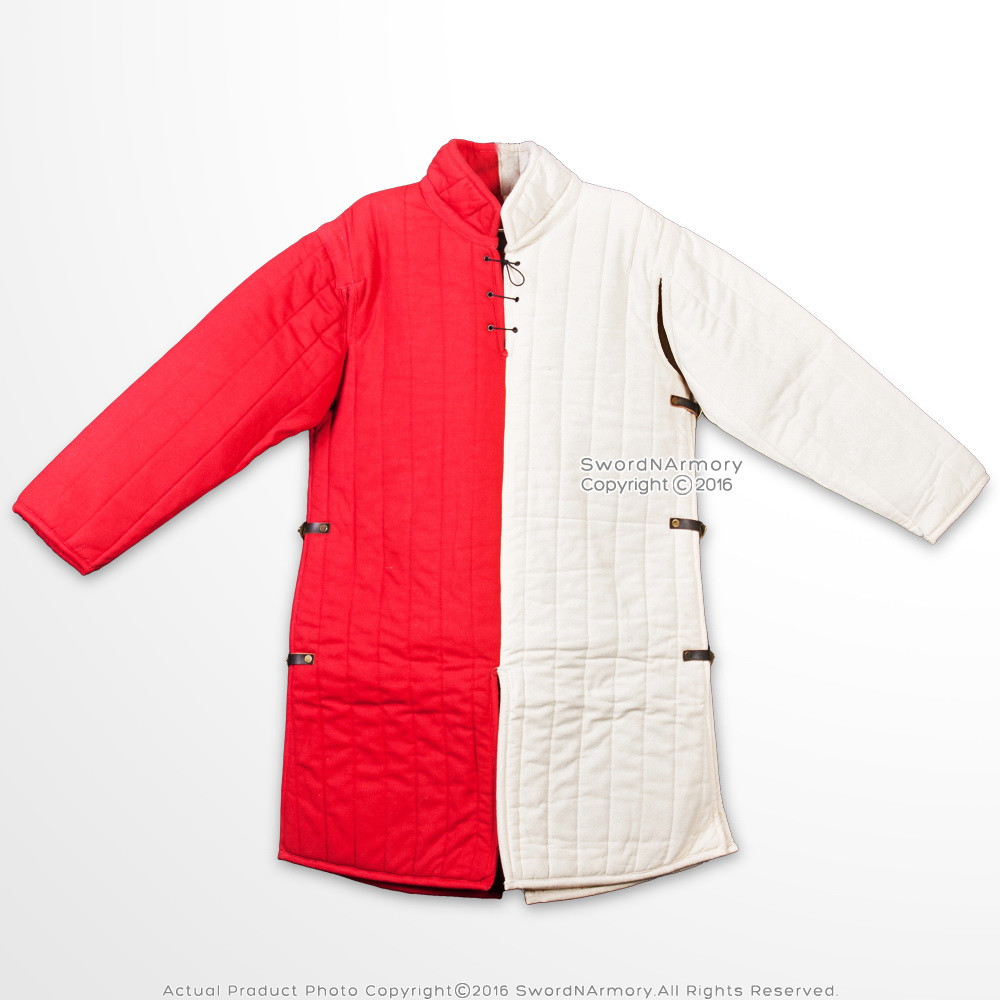
A gambeson was layered textile armor.
It was commonly worn beneath mail or early plate. Metal plates were not normally what made a garment a gambeson, and a complete mail shirt was generally a separate armor layer.
Armor was a system of layers
Protection came from combining different materials. The gambeson sat closest to the body, with mail above it and plate on top in many setups. Each layer handled different threats.
1Textile
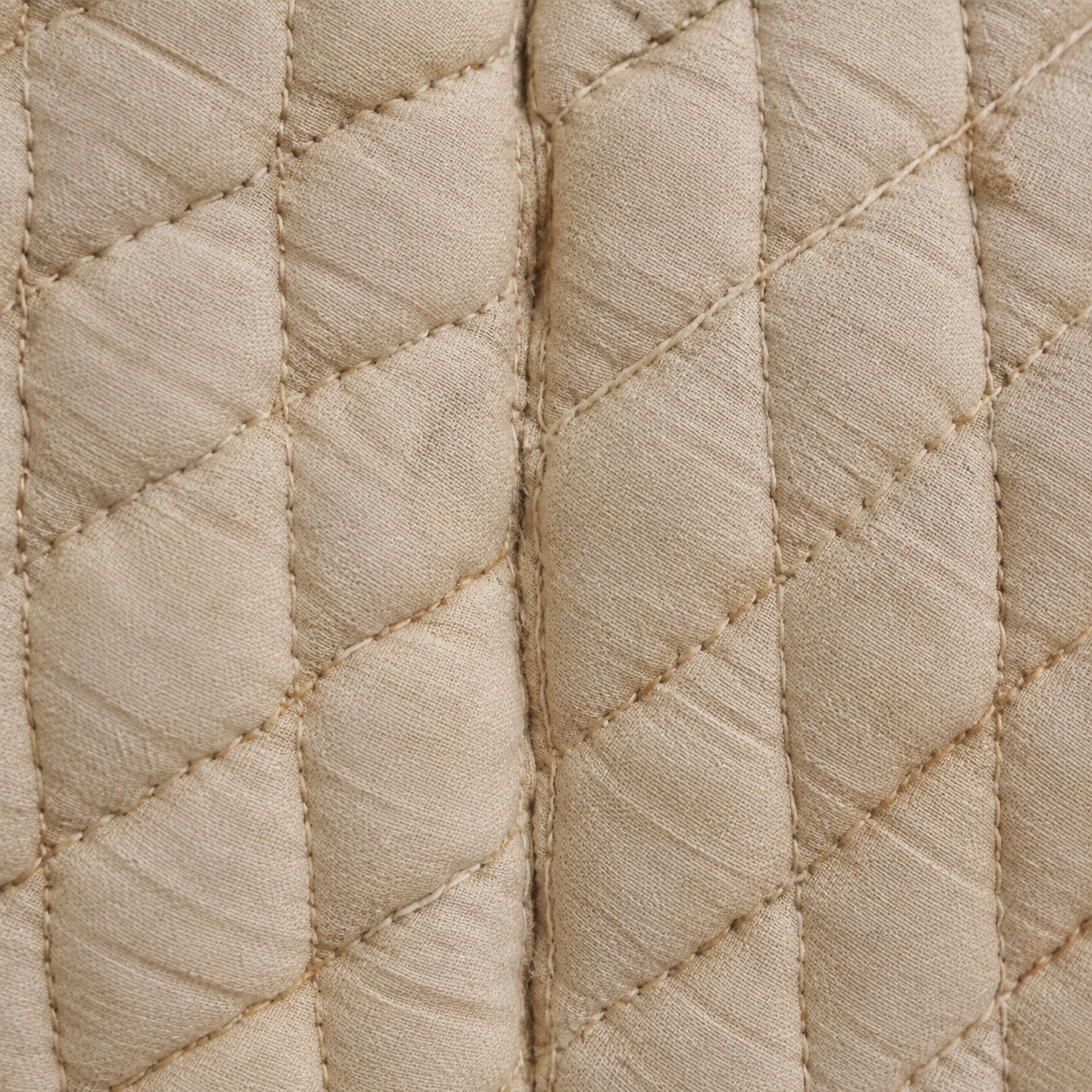
Layered fabric created a soft barrier beneath armor, reduced chafing, and helped cushion the force of impacts.
2Mail
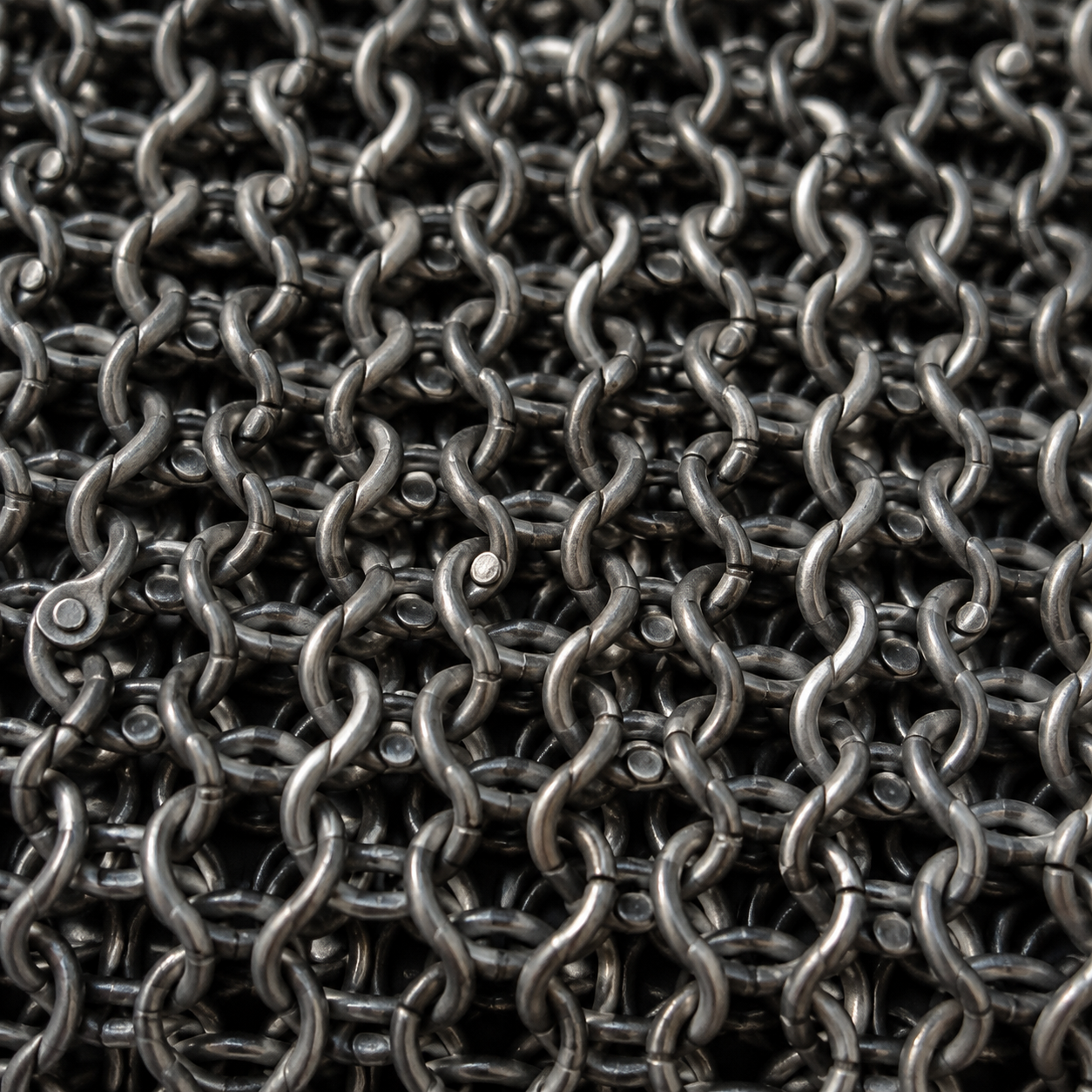
Interlinked rings formed a flexible metal defense that resisted cuts while allowing the wearer to move.
3Plate
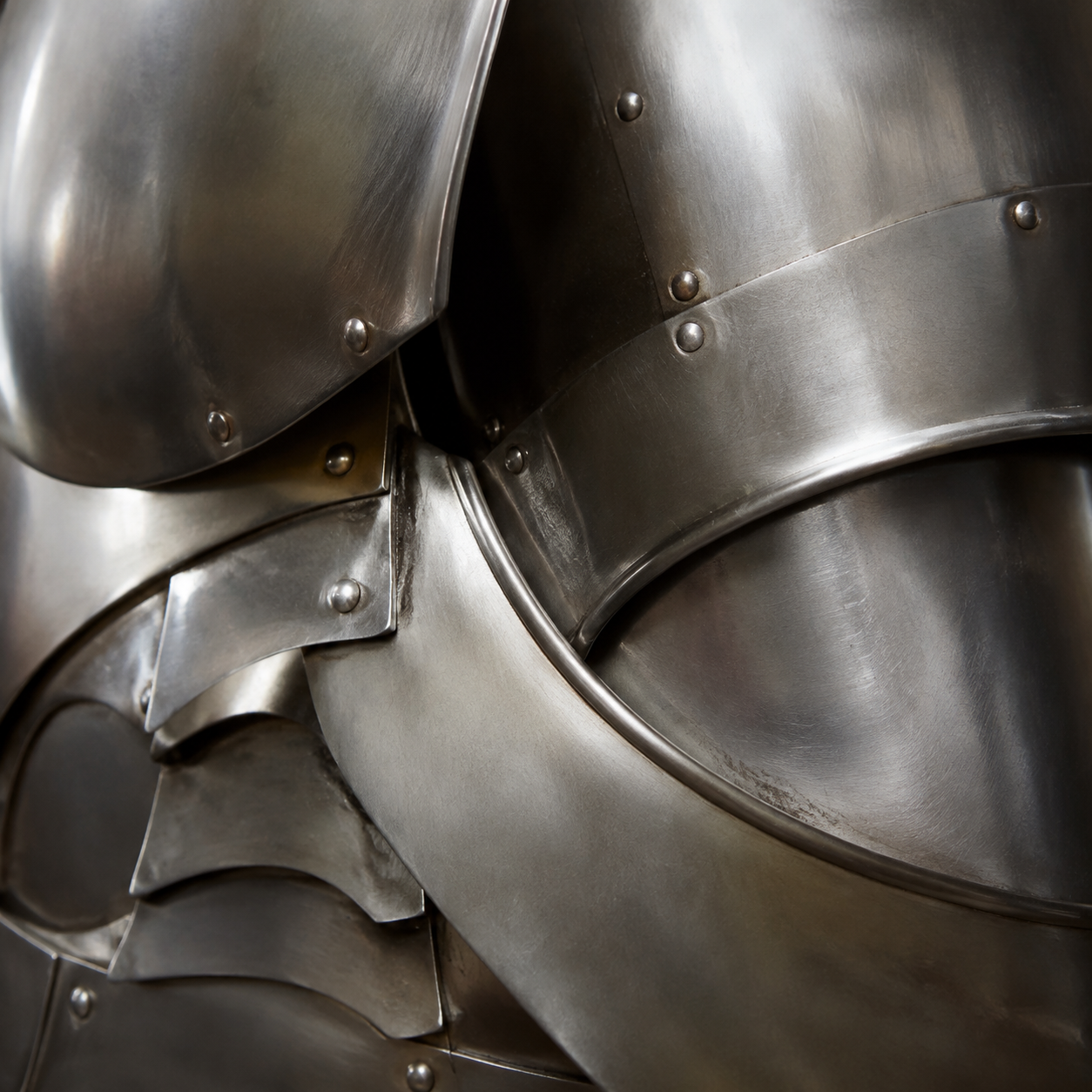
Shaped steel spread force across a rigid surface and protected selected areas from heavier blows.
What made a gambeson protective?
The Metropolitan Museum of Art describes the gambeson as many-layered, heavily quilted fabric armor worn beneath mail and early plate defenses. Its protection came from the textile structure itself, not from a concealed sheet of steel. The layers helped create a barrier between the wearer and both the armor above it and the force of an incoming strike.
There was no single universal gambeson pattern for every century and region. The safest historical description is therefore functional: it was a quilted textile defense, often used as an underlayer, whose exact construction depended on context. Claims that every gambeson had the same material, thickness, or number of layers go beyond what the institutional evidence establishes.
Source: The Metropolitan Museum of Art, “The Function of Armor in Medieval and Renaissance Europe”.
Was mail worn over or under a gambeson?
Mail armor was commonly worn over a quilted garment. The flexible mesh of interlinked metal rings was highly useful against cutting attacks, but it did not distribute impact in the same way as a rigid plate. Padding underneath made the mail more comfortable, protected the wearer from the mail itself, and helped absorb some of the force of a blow.
That does not mean padding made mail proof against every weapon. Royal Armouries notes that mail was less effective against piercing and percussive attacks, and no armor system guaranteed complete protection. The useful historical picture is a combined system: textile, mail, and later plate each performed a different role.
Sources: The Metropolitan Museum of Art and Royal Armouries, “The Hundred Years’ War 1337–1453”.
Did gambesons contain metal plates?
If the garment’s primary defense consisted of iron plates riveted inside fabric, “gambeson” is usually not the most precise category. Royal Armouries describes the early “pair of plates” as a body defense made from iron plates riveted inside fabric. The Met likewise describes the development of fabric-covered plate defenses and later brigandine armor forms.
This distinction matters:
| Armor term | Main protective structure | Typical relationship to fabric |
|---|---|---|
| Gambeson | Layered, quilted textile | The textile is the armor or padded foundation |
| Mail shirt or hauberk | Interlinked iron or steel rings | Commonly worn over quilted fabric |
| Pair or coat of plates | Iron plates | Plates riveted inside a fabric covering |
| Brigandine | Multiple metal plates | Plates secured within or behind a textile covering |
| Arming doublet | Fitted padded garment | Supports plate components through arming points |
The table is a practical guide, not a claim that historical terminology was perfectly standardized. Names and constructions changed across places and periods, and “coat of plates” and “brigandine” should not be treated as exact synonyms in every context.
Sources: Royal Armouries and The Metropolitan Museum of Art, “Arms and Armor in Medieval Europe”.
Did gambesons have chainmail underneath or sewn into them?
The approved evidence does not establish that a typical gambeson contained a complete mail shirt. Where the institutional overviews describe full mail, they place it over a quilted garment rather than inside that garment.
There is, however, an important later exception involving related arming garments. A Metropolitan Museum object record explains that shaped mail panels, or gussets, could be attached to arming jackets to protect gaps such as the armpits and bends of the elbows when full plate armor was used. This was localized mail integrated with an arming foundation—not evidence that every gambeson contained a full hidden mail shirt.
Source: The Metropolitan Museum of Art, “Brayette and Buttock Defense”.
Gambeson versus arming doublet
The difference is partly chronological and functional. The Met describes a gambeson as heavily quilted fabric armor associated with mail and early plate. For a later plate harness, the wearer used a specially fitted padded arming doublet. Individual plate elements could be tied to it with arming points.
Both were textile garments used in armor systems, but that does not make them universally interchangeable labels. “Gambeson” is the better broad answer when discussing quilted textile armor and padding beneath mail. “Arming doublet” is more precise when discussing the fitted foundation used to support a developed plate harness.
Source: The Metropolitan Museum of Art, “The Function of Armor in Medieval and Renaissance Europe”.
Shop Gambesons
These modern garments are offered for historical study, costume, training, reenactment, or LARP according to each product description.
Quilted Short Gambeson
View product →Medieval Arming Doublet
View product →Reversible Long Gambeson
View product →Review each product’s stated construction and intended use. Historical context does not establish modern protective certification.
Frequently Asked Questions
Was a gambeson armor or just padding?
It was textile armor and could also serve as the padded foundation beneath mail or plate. Calling it “just padding” understates its protective role.
Was chainmail worn over or under a gambeson?
Mail was commonly worn over a quilted garment. The fabric improved comfort and helped cushion impact.
Did gambesons have metal plates sewn inside?
Not as their defining construction. Iron plates riveted inside fabric describe a pair or coat of plates or a related brigandine form more accurately.
What is the difference between a gambeson and an arming doublet?
A gambeson is a quilted textile defense often discussed with mail and early plate. An arming doublet is the fitted padded foundation used to support later plate components through arming points.
Could mail be attached directly to a padded garment?
Yes, in a limited later context. Mail gussets could be attached to arming jackets to cover gaps in plate armor. That should not be generalized into the claim that all gambesons contained mail.
Sources and further reading
Explore the Full Collection
Gambesons, arming jackets, and related medieval clothing.